

From December 7 to 9, a 14-member joint inspection panel commissioned by the China Engineering Education Accreditation Association (CEEAA) conducted an on-site inspection of four majors at SDUT: Applied Chemistry, Mechatronic Engineering, Measurement and Control Technology and Instrumentation, and Computer Science and Technology. The panel was led by Professor ZHANG Linghua (Nanjing University of Posts and Telecommunications), who served as the general coordinator. The four sub-groups were headed by Professor AI Ning (Jiaxing University), Professor JIN Weiya (Zhejiang University of Technology), Professor ZOU Limin (Harbin Institute of Technology), and Professor YE Lin (Chairman of Tangcloud Technology).
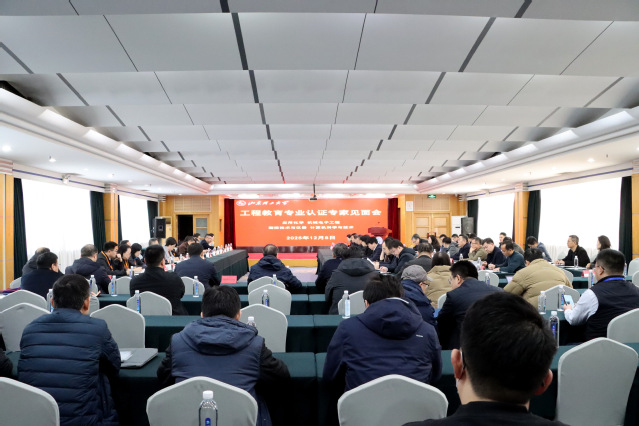
On the morning of December 8, the Opening Ceremony for the inspection was held in the conference room of the North Building in Xingyuan Hotel . The meeting was attended by members of the expert group and university leaders LI Yuxia, CHEN Shengwei, and ZHANG Shouheng. The first session of the ceremony was presided over by CHEN Shengwei, Standing Committee Member of the University Party Committee and Vice President of SDUT.
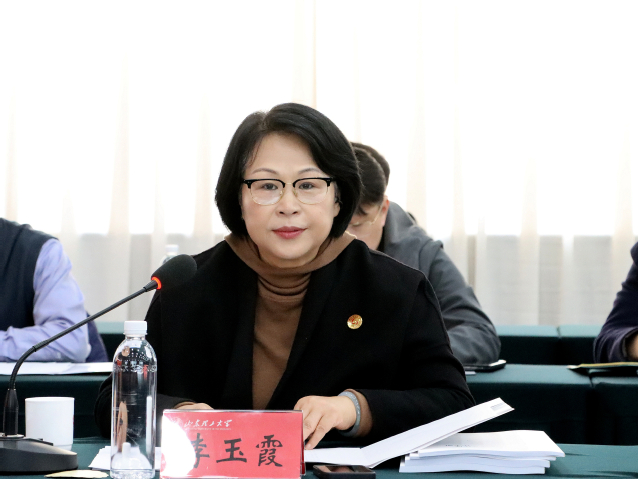
President LI Yuxia extended a warm welcome and expressed her gratitude to the expert panel on behalf of the university. She provided a brief overview of SDUT’s institutional profile, the current development of the four participating majors, and the university’s overall progress in engineering education accreditation. She emphasized that professional accreditation is a vital catalyst for deepening engineering education reform and enhancing the quality of talent cultivation. President Li invited the experts to offer their candid insights and provide a “diagnostic assessment” of the four programs to help drive the continuous elevation of engineering education standards at SDUT.
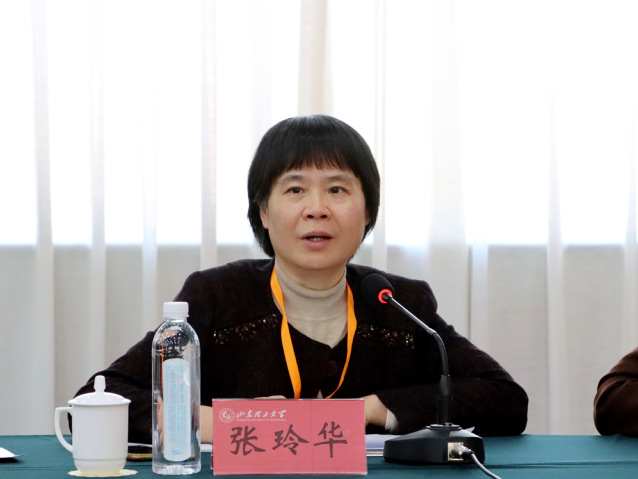
The second phase of the meeting was presided over by Professor ZHANG Linghua, who provided a brief overview of the inspection’s objectives, core evaluation criteria, and relevant operational requirements.
Subsequently, the program coordinators for Applied Chemistry, Mechatronic Engineering, Measurement and Control Technology and Instrumentation, and Computer Science and Technology presented supplementary reports to their respective Self-Assessment Reports.
Following the presentations, the expert panel conducted an on-site inquiry and exchange with the heads of relevant university departments to verify key issues identified in the self-assessment documentation.
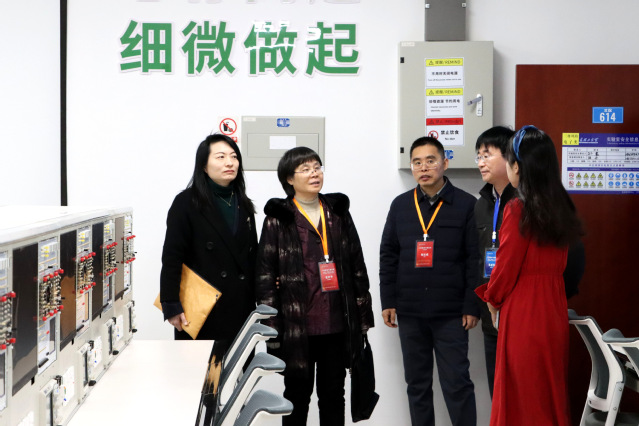
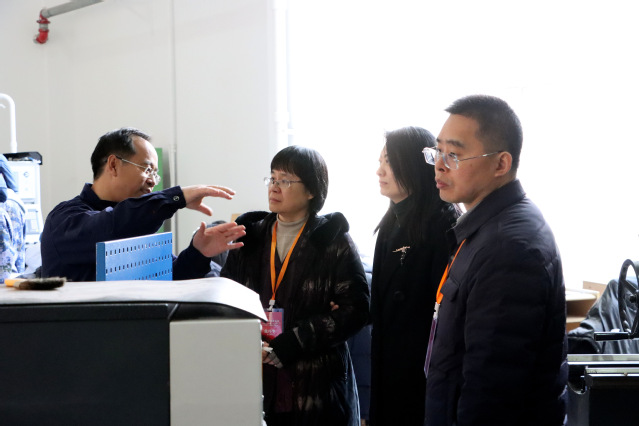
Throughout the inspection period, the expert group adhered strictly to the China Engineering Education Accreditation (CEEA) standards. The panel conducted a comprehensive, systematic, and rigorous evaluation of the four programs through various methods, including on-site laboratory inspections, symposiums and interviews with stakeholders, and a thorough audit of academic archives and supporting documentation.
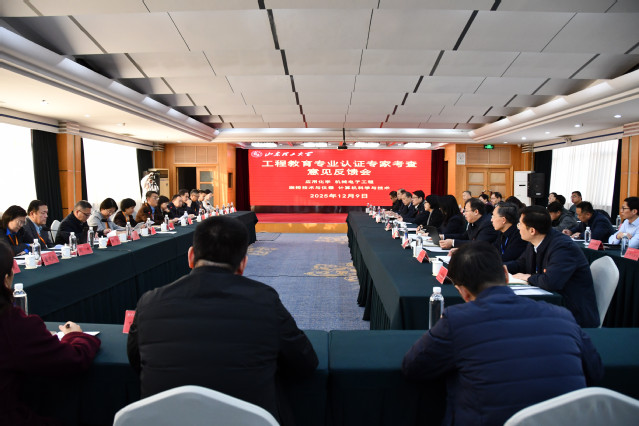
On the afternoon of December 9, the Expert Group’s On-site Inspection Feedback Session was held in the second floor conference room of the North Building in Xingyuan Hotel. The meeting was attended by members of the expert panel and university leaders LI Yuxia, PANG Qiuxiang, and ZHANG Shouheng. The session was presided over by Professor ZHANG Linghua.
On behalf of the expert group, Professor ZHANG Linghua presented the panel’s feedbacks, commending the preliminary work and significant achievements of the four participating majors. Subsequently, the experts from each sub-group provided detailed feedback based on the accreditation standards. They identified key areas for development and offered targeted recommendations for improvement across several critical dimensions, including program educational objectives, curriculum systems, and faculty resources.
President LI Yuxia delivered a formal statement of commitment on behalf of the university. She remarked that the expert group’s feedback was objective, insightful, and precise, addressing the core issues of program development. She stated that SDUT fully accepts the findings and will take rigorous action to ensure the thorough implementation of all recommended rectifications.
To ensure the expert group’s feedback is translated into tangible results and to elevate SDUT’s program development and talent cultivation to a new level, President LI Yuxia emphasized four strategic priorities. First, the university must ensure the effective implementation of rectifications by establishing a “closed-loop” mechanism to ensure all identified issues are fully resolved. Second, efforts should be focused on strengthening high-quality program development, prioritizing the cultivation of core competencies to build distinctive and competitive majors. Third, SDUT will deepen curriculum system reform by optimizing course structures and instructional content to enhance the overall quality of education. Finally, the university must refine its quality assurance framework by institutionalizing comprehensive, whole-process monitoring mechanisms, striving for even greater breakthroughs in the development of first-class majors and professional accreditation.
The opening and feedback sessions were attended by the heads of relevant university departments and the leadership teams of the respective engineering colleges. Participants included the leadership and program coordinators from the School of Mechanical Engineering, the School of Computer Science and Technology, and the School of Chemistry and Chemical Engineering, as well as the heads and faculty representatives of the accredited majors.